
How to Make Disciples Through Intentional Conversations
June 25, 2026
This is a personal story from Margré Hays, a long-time GEM worker who grew up in the Netherlands. Through working with GEM, Margré and her husband, Peter, started various ministries in the Netherlands. They have influenced more than 50 nations through leadership training and Bible teaching, reached their city of 250.000 people through the Power to Change campaign, and helped many people know that there is a God in heaven who loves them very much.
As part of her ministry, Margré works with international teams to share about Jesus right in their neighbourhood. These are some of her experiences and how you can be intentional in your conversations, too.
Discipleship is helping people move one step closer to knowing God, which happens as we intentionally engage others, listen well, and point them toward Him. When we ask the Holy Spirit for divine appointments and remain open to His leading, we often discover opportunities for conversations that only He could have arranged.
These are memorable conversations I have had recently, and I hope to share how you can also be intentional.
Having sweet conversations
One day, I saw a woman eating an ice cream cone on a bench. I felt the Holy Spirit nudge me to have a conversation with her, so I bought myself an ice cream cone and asked if I could join her. She invited me to sit, and then we began to chat.
I asked if I could ask her a question, and she agreed. “Have you ever had a spiritual experience?” She told me she had them daily, and so we launched into a deeper conversation. I posed more questions to discern how I could share the truth with her. In the end, the Holy Spirit paved the way beautifully. I was able to encourage her to read the Bible to find truth through the written Word and to understand her spiritual experiences.
Even though this encounter was short, it was also a discipleship moment. These conversations let people know there are real Christians who believe in and live by the Bible and in the God of the Bible. Hopefully, one day their curiosity will be piqued, and they will want to know more.
Asking the right questions
When teams work with us, we ask people on the streets a few simple questions.
The first question we ask is: “What do you think people need most?” The options to choose from are:
- Love
- Peace
- Safety
- Healing
- Strength
- Forgiveness
- Freedom
- Hope
- Something else
The second question is: “Why do you say that?” It’s amazing how people are happy to answer this question, as their answers usually relate to something in their personal lives. If the person does not have an answer, we say, “Would you mind if I told you how I have hope (or peace, freedom, etc.) in my life through my faith in Jesus Christ?”
Because we have just listened to them, they are often open to listening to our testimony or short explanation of how Jesus loves them.
When we encounter young people, we also ask “Has anyone every told you about such Good News?” The answer is often: “No, I have never heard anyone tell me about this.”
Romans 10:14 says, “How are they to hear without someone preaching?” At the end of the day, we are so thankful for the opportunity to share the Good News but so sad that not many people dare to go out and share the gospel.
Being one friendly face
One day in a park, my teammate Anita and I noticed a man sitting alone by the water. We asked if we could ask him a question, and he agreed. While sitting down beside him, we asked him our question. He told us he always prays for his food. We asked him, ‘To whom do you pray?’
He answered, ‘I really don’t know.’
When we invited him to church or an Alpha Course, he politely declined, explaining he had too many pressing problems. I offered to pray for his issues, and he loved that idea. When we left, we gave him a card with an evangelistic website, so he can look up testimonies about changed lives in his own time. He said, “I have never met friendly people like you two ladies.” It was a huge encouragement for us to be able to connect to where he was hurting, pray for him, and share a Bible story.
Sharing our stories
Another time we spoke to a lady who identified as an atheist. When asked what people need most, she chose ‘trust’ and ‘hope.’ Our teammate Nilufer shared her testimony about being a former atheist until her best friend died in a car accident. She did not understand why this happened. Her search for answers led her to buy a Bible, and she found a church that helps her share her story on the streets..
We explained to this atheistic lady, that she could have this trust and hope too, if she believed in the Lord Jesus Christ. She thanked us for the conversation and went on. Two things happened here: We connected with her lack of trust and hope in life. Secondly, she related to someone else’s life who was changed through faith in Jesus Christ and found hope and trust again.
Trusting God will do the work
A local pastor interested in learning how to have such conversations on the streets came along with one of us, and four times there was a “No, I’m not interested.” She was thinking: “I’m wasting my time here, no one wants to talk to us!” Then a young couple was willing to answer the question of what people need most, leading to a deep conversation. They were Christians but had been disconnected from a local church for many years and had just started thinking about finding a church community.
The pastor offered to pray for them, and they were so thankful that they were stopped and talked to as if God was in it, they said. When they said goodbye, Peter said: ‘We first had to get four “Nos” to have this one divine appointment.’ The pastor had not thought about it that way and was discipled that day also!
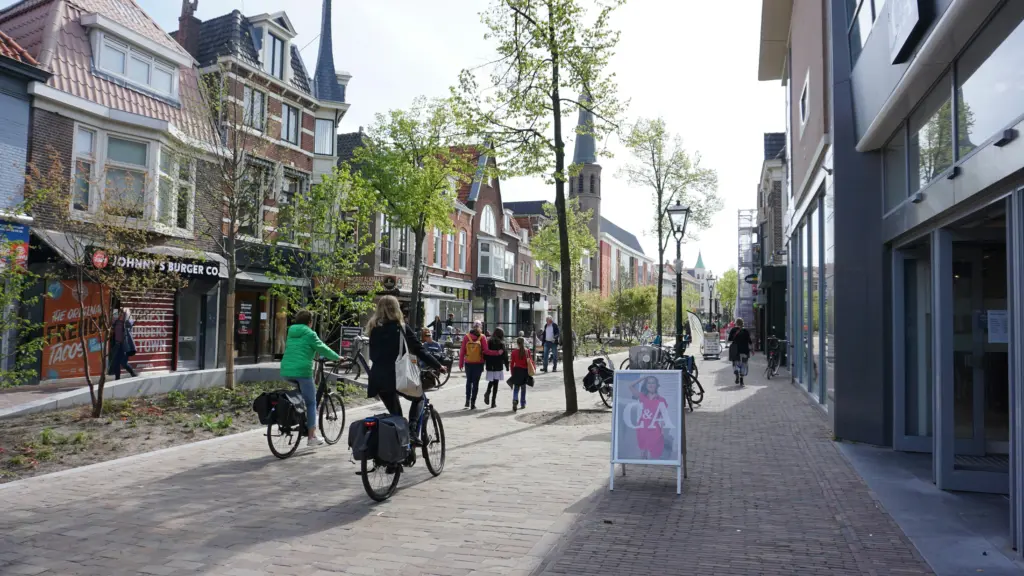
How can you be intentional with having your own conversations?
- Pray for the Holy Spirit to lead you to the right person and to nudge you toward initiating these conversations.
- Observe the people around you. Do they look sad, lonely, or open to a conversation? If they look at you, you can invite them to answer a question. If they sit on a bench, join them, and start talking about the weather or another easy topic.
- Observe what people are wearing or need. Giving a compliment really opens people up. I often think about the verse, “Let your friendliness be known to all.” (Philippians 4:5). If someone is wearing a cross, ask them what it means to them. If they’re sitting in a wheelchair, look for ways to serve them with groceries or offer to help them into their car. Our team hands out teabags with a card to our evangelistic website with a QR code. People appreciate free gifts.
Sometimes when I’m in a new town, I will ask them if they were the mayor of the town, what would they change? With open-ended questions like this, you can often find great connection points to what Jesus offers them.
If you are willing and available, God will open doors and hearts for the gospel. You just have to step into those moments with His presence and guidance.