
How a Former Dump Yard Became a Thriving Church Building in Serbia
September 21, 2026
In 1996, the Bakic family encountered a miracle which saved the life of their eldest son, which could have only been explained by a work of God. Sherif Bakic was a dedicated member of the communist party and worked for the state as a professor, in which it was illegal to claim anything other than atheism. However, after God intervened, Sherif and his family’s lives were transformed by their newfound love of Jesus.
Thirty years later, their family has been an integral part of the church and its ministries.
Ten years earlier, Pastor Mio Stankovic had been a pastor of the Evangelical Protestant Church for several years already. The church was located in Leskovac, Yugoslavia, which is now Serbia. The church and its members were often attacked, and some were imprisoned.
Mio and his American wife, Else, had a Roma maid who helped them around the house. Suddenly, she fell ill, and Mio had what was at the time a revolutionary idea: he should pray for her. Nobody at that time had thought to preach the Gospel to this people group. So when God spoke to Mio, he listened. It’s reported that she was healed instantaneously.
This was the moment that sparked a movement.
Soon, Mio’s church was overflowing with Serbians and Roma alike. Due to cultural differences and musical preferences, Sunday morning services were held for Serbian churchgoers, and evening services were held for the Roma. The evening services began to fill up as the word spread about what God was doing. Mio was praying for people, and they were being healed!
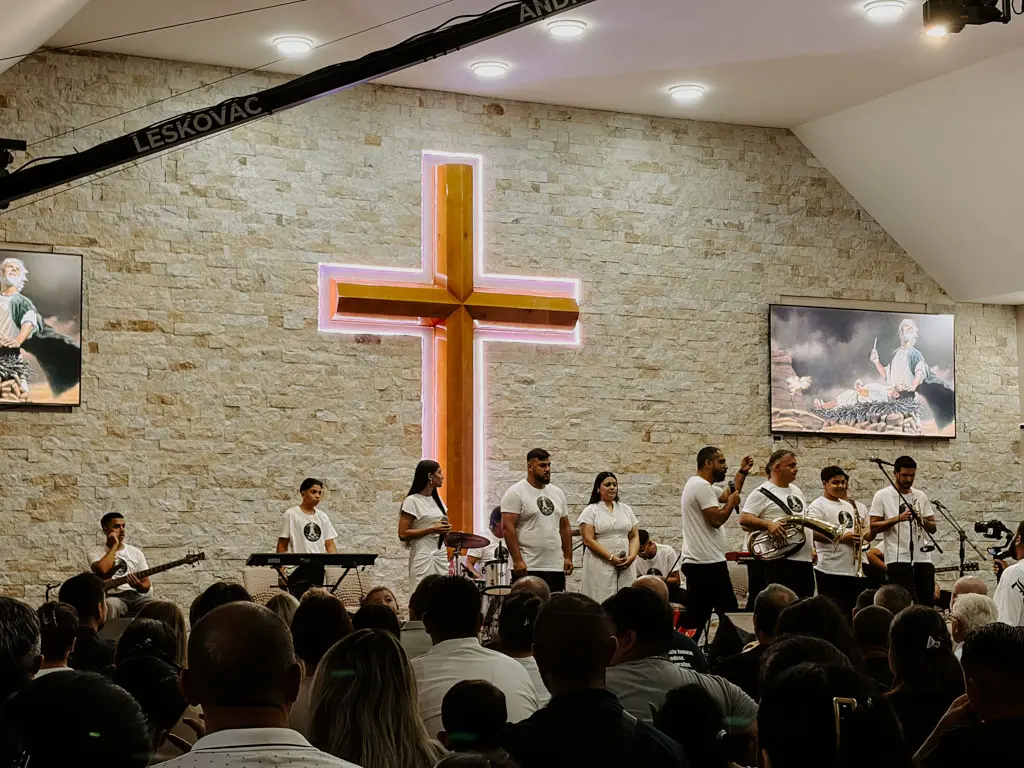
He quickly realised that they were going to need a bigger building to fit everyone.
In Leskovac, there were three recognisable Roma communities, all of which were Muslim. Within 10–15 years of the Gospel coming to the Roma people two of the communities were transformed to being believers. This is what Misha, the youngest son of Sherif, told us with excitement in his voice. Sherif is now the lead pastor of Vitezda, which is the church’s current name. Misha is a church leader and GEM appointee, and his brother, Trajche, serves as the youth pastor.
Pastor Mio began searching for land in the early 2000s that was closer to the community. He passed away in 2009, but Misha says that their church “inherited the vision and we ran from there.” The area of land that was originally found was owned by numerous people and was a dump yard for the city.
“There used to be a company, and they would dig out the land and make breaks, so the whole land was just holes. Then, people would come and dump their trash into the holes.” They needed to completely clear the land before they were able to start building. Those who helped with the cleanup primarily consisted of volunteers who were willing to comb through the putrid area. It took seven years for them to clean through the mountains of garbage.
“It was the ugliest place in all of Leskovac.” Misha continued, “I did most of the fundraising and planning [for the church building]. The whole time, there was one word in my heart, which was ‘dignity.’ God’s gonna turn this place into a dignified place…It’s a picture of God’s redemption.”
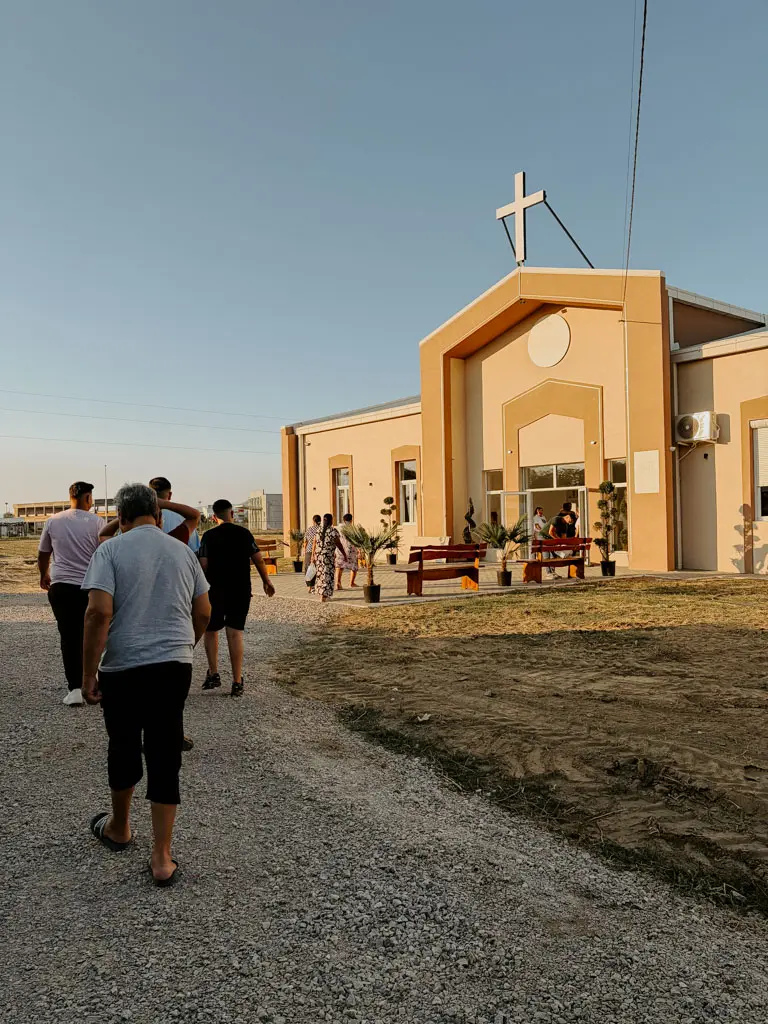
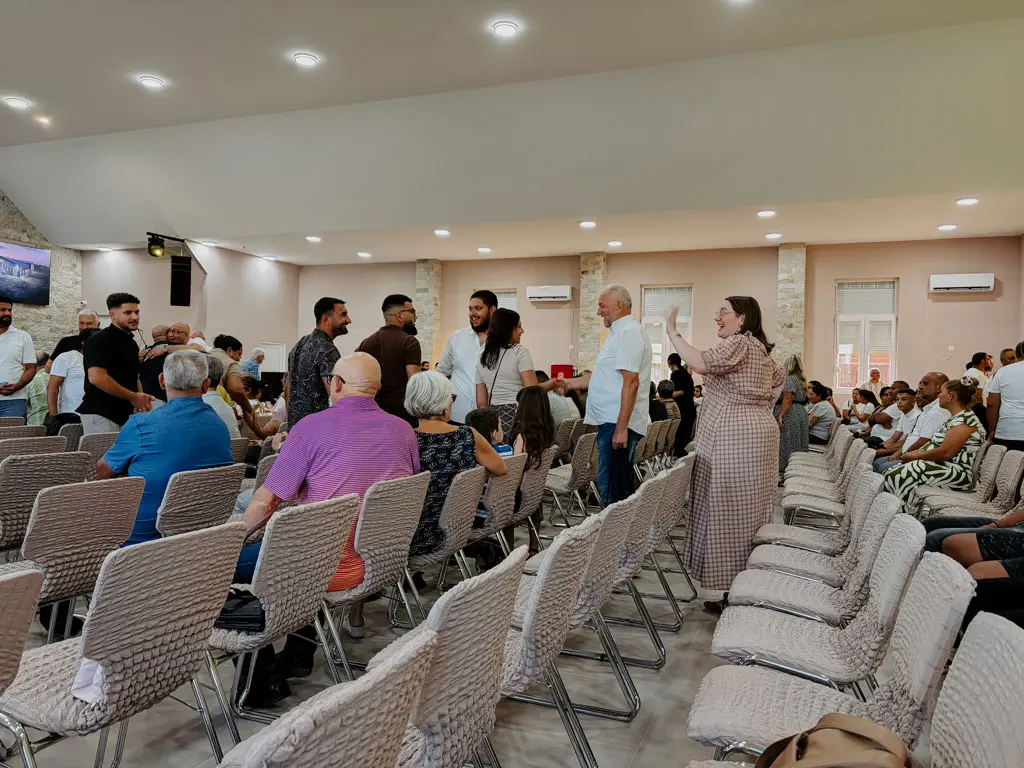
The church was finished in late spring of 2026, and on 11 August, they had their official opening and church dedication. The room was packed with at least 600 people—Roma, Serbians, Americans, Germans, Austrians, and many more there to celebrate what God has been doing!
The energy was electric, with old friends excitedly greeting one another as seating quickly turned into standing room only. The worship was loud enough to shake the building itself. The band included their normal Sunday band with a few additional instruments. The service itself was a testament to their own faithfulness and God’s faithfulness. Dozens of speakers came up to speak about the church.
However, Vitezda does not view this brand-new church building as their final ultimate goal. “It’s a beautiful tool, but the goal is not for it to become a place where people just come on Sunday…people come, they get trained, and they get sent out,” Misha explains.
The church’s heartbeat is to make disciples, and that can be evident through many different avenues, which include their church plants. They currently have eight church plants that have anywhere between 50 and 100 people who attend regularly. Another focus of their church is the youth. They strongly believe in pouring into the next generation and bringing them up as leaders. They are given opportunities to help lead worship, preach messages, and step up into other leadership roles. In fact, Sherif steps back from preaching most Sunday mornings to let those younger than him, including Misha, have the opportunity to preach.
There are a number of other ministries that the church is involved with. One is a preschool for Roma children, which has exponentially improved the literacy rate and high school graduation rate. Another ministry has been involved in translating the Bible into the Romani language. They also run their own youth, children’s, women’s, and men’s ministries.
“Our three-point vision is church planting, making disciples, and bringing unity—to bring unity in the body of Christ and outside of the body. We believe that [Vitezda] will serve as a place of reconciliation.”
About the author: Madeline Hill serves full-time with Greater Europe Mission in Macedonia, partnering with a local business as mission organisation.