
Sharing Hospitality to Refugees in Prague: How God Works through Welcoming Spaces
August 17, 2026
At a recent women’s brunch that she and her co-workers hosted for refugees at the Ukrainian church in Prague, GEM worker Debby Nichols was delighted to see a particular woman attend. Olya, a spry 72-year-old, immediately walked up and gave her a hug, a big smile on her face.
Smiling was something new for Olya, whose life had been far from easy. When she had first arrived in Prague as a refugee from war, her seven-year-old granddaughter Anna in tow, Debby could see that she was weighed down with grief and anxiety. With her brow continuously furrowed, Olya had a perpetually depressed demeanor, and was often grumpy. Nevertheless, she showed up at the picnics and other gatherings Debby and her team put on for displaced Ukrainians, and she always brought little dark-haired Anna along.
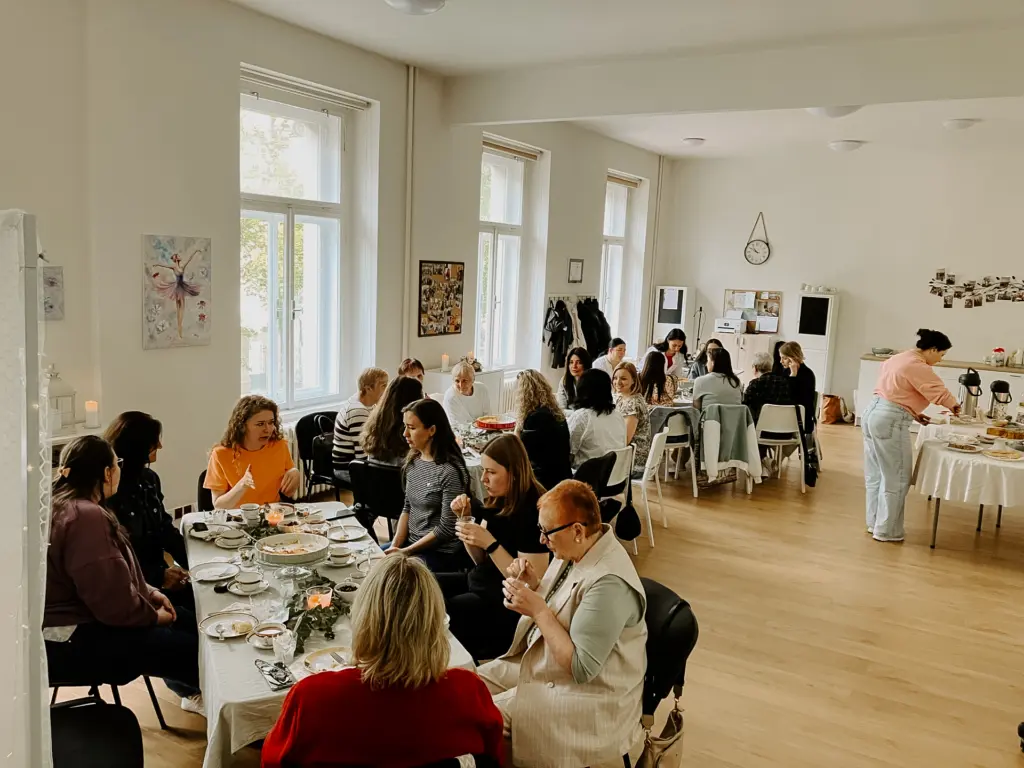
Debby and her co-workers hosted these get-togethers, knowing that sharing food around a table does wonders to soften hearts and draw people out. They knew that those who seemed to appreciate it the least needed it the most. For a long time, Olya’s angry-with-the-world demeanor prevailed.
Nevertheless, they were in it for the long haul, knowing those who have been through trauma need time to relax their nervous systems and feel calm enough to receive love and respond to kindness.
That’s why Olya’s sudden change caught Debby off guard. When the older woman was invited to a Christian worship gathering, she agreed to go, but insisted she would only attend the social and game time, not the service.
But something happened … something only the Holy Spirit could accomplish.
When Debby saw a video of the service a few days later, there was Olya, singing praise songs with a smile on her face. It was the first time Debby had ever seen her smile. Grudgingly, Olya had stayed for the service. While there, she’d had an encounter with God that changed her heart.
“Now, Olya gives me a bear hug when she sees me,” says Debby. “Her face lights up. Christ is in her! You feel it; you see it. She comes to every brunch.”
Debby stresses the importance of community in reaching both Olya and Anna. When Olya began going to church regularly, she took Anna along with her. But little Anna was a handful—constantly disrupting things and searching for attention.
Those doing children’s ministry at the church refused to be put off by the child’s behavior. They spoke kindly to Anna. Instead of saying, “Cut it out, Anna,” they said things like, “Oh, Anna, you’ve got so much energy! Let’s go and do a craft together,” or “Can you help me prepare the snack?” Some in the church community taught her Bible lessons in Sunday school, while others ran the summer camp where Anna continued to hear the gospel.
In time, Anna began to settle down. Finally shown appreciation rather than annoyance, given the love and attention she craved, the girl gradually became compliant and helpful.
Trauma closes people off, but hospitality practiced with patience and kindness can slowly open them up again. Olya came into Debby’s orbit because the believers at the Ukrainian church in Prague, who were feeding many Ukrainian refugees each day, decided they wanted to feed their souls also.
Debby, whose fluency in Russian enabled her to understand a bit of Ukrainian, was happy to come alongside and help organize ways to do this.
“When it’s my turn to put on a women’s brunch, I set the room up with pretty tablecloths and fancy dishes, trying to make the setting visually beautiful,” says Debby. “The ladies come and chat, and we have a children’s program. The room is crowded, but cozy. After listening to our main speaker, a Christian Ukrainian woman, we discuss various topics at our tables. We have created a space where people feel welcomed, loved, and accepted.”
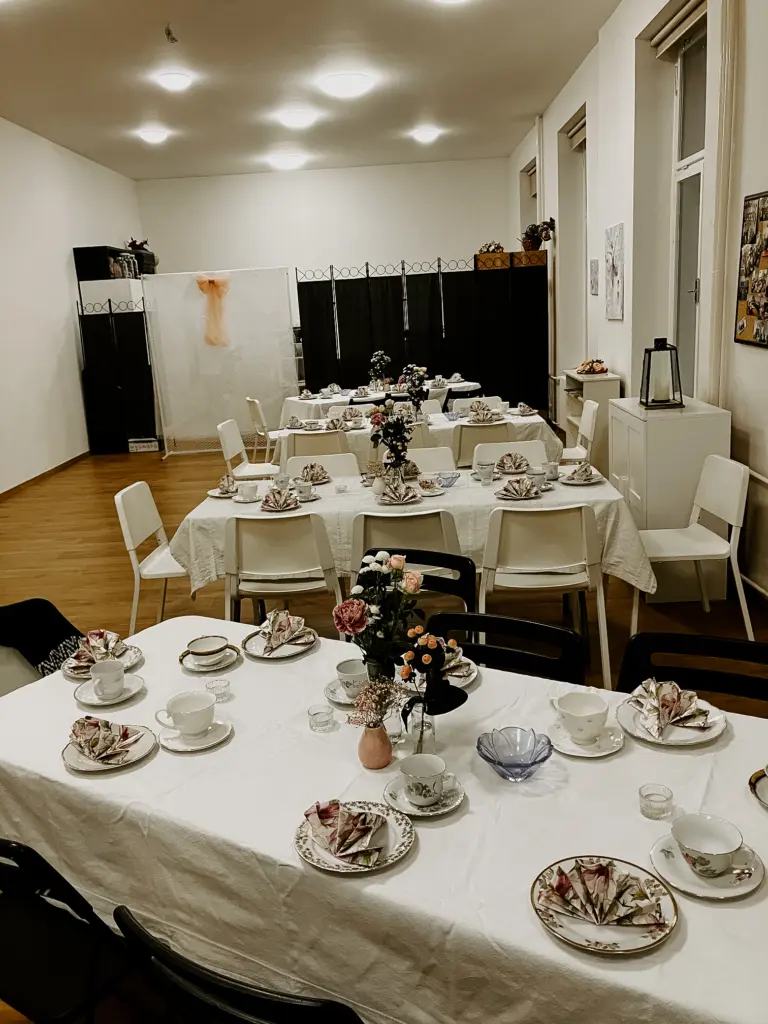
As coffee and tea are served after the meal, Debby invites women to gather again as she gives a short testimony about how God has worked in her life over the past week or leads a discussion on a biblical topic.
“Slowly, we have begun to see the Ukrainian women open up and share with the group,” she says. “One day, our subject was thankfulness. Some of the women spoke honestly about how hard it was to feel thankful when they had gone through such terrible things. Naturally, they are worried about their families back in Ukraine. A few women are open about their struggle to find faith, but say they are seeking. Our brunches give these women the freedom to be open and vulnerable while feeling welcomed and loved.”
In Prague, this regular brunch—an event of beauty, hospitality, and Christian witness—continues to provide traumatized women with a safe space to heal and hear the gospel.
Author: Jenny Garrity is a Storyteller with Greater Europe Mission. Jenny and her husband, Kim, joined GEM in 1984. They have served in Germany, Belgium, and most recently, Greece in response to the refugee crisis.