
Making Space for Connection in Berlin
October 7, 2026
A young man named Gerrit, in his mid-thirties, dressed in a winter coat and carrying a backpack, pushed open the door and glanced around the unfamiliar room. He saw a handful of people working on laptops near shelves covered with potted plants.
The cozy café and coworking space had recently opened, and Gerrit, relatively new to Berlin, had never seen it before. Icy conditions had halted the trams, so he had to walk to work. Along the way, the prospect of a few minutes indoors with a warm cup of coffee sounded appealing.
“What is this place?” he asked after ordering his drink.
Luke, a GEM worker, replied, “It’s a café, coworking, and community space. Amanda and I, along with some others, wanted to create a place in the neighborhood where people could get some work done, meet other people, be creative, and spend time.”
Gerrit smiled. He talked about how lonely Berlin had felt when he first moved there and how easy it could be for internationals to fall into a routine of going from home to work and back again without building much community.
Since that day, he has returned a few times. He even offered to help develop a customer loyalty punch card for the café.
The café and coworking space sits along a busy street lined with apartment buildings and an eclectic mix of ground-floor businesses: a workwear shop, a couple of hotels, a shop specializing in latex fashion, a therapist who advertises shamanistic rituals and “love magic,” and a corner store, all in close proximity to one another.
Recently, an older German neighbor named Simon stopped in for a coffee on his way to a nearby park where he took regular walks. He already knew the new space was opening and came in to say hello.
He mentioned that he was an amateur photographer and offered some of his photos to hang on the walls.
As with Gerrit, Luke answered Simon’s questions about what the space was all about. As they talked, Simon asked why Luke and the others were doing this if making a profit was not the main goal.
Luke referred to a story in the Bible in which God’s people are told to seek the good of the city where they are living. “That idea has shaped how we think about being here,” he said. “We want to care about the people and the neighborhood around us, especially those who are marginalized in society. Berlin can be a lonely place. We want to give people a welcoming space.”
Simon laughed. “Really? That’s interesting. We could probably use more Jesus people like that in this city.” He has since stopped in a few more times and still asks Luke how “the café” and his “other church work” are going.
The idea for the café and work hub grew out of Luke and Amanda’s many years of living in Berlin, with Amanda playing a major role in shaping the vision and helping drive the project forward. The GEM couple knew first-hand how huge and intimidating the city could be; they also knew it as a highly secular city where many people are skeptical of organized religion. Berlin has even been described as “the atheist capital of Europe.”
“Some of the more direct approaches to evangelism don’t always create much space for meaningful conversation here,” says Luke. “Trust and credibility often take time to build. We wanted to be present in the neighborhood in a way that was consistent and relational, and to create a space where relationships could develop naturally and conversations about life and faith could happen without pressure.”
And indeed, in the “third space” they are building, Luke, Amanda, and their co-workers are cultivating an atmosphere where people are open to talking about things they might not otherwise feel free to discuss.
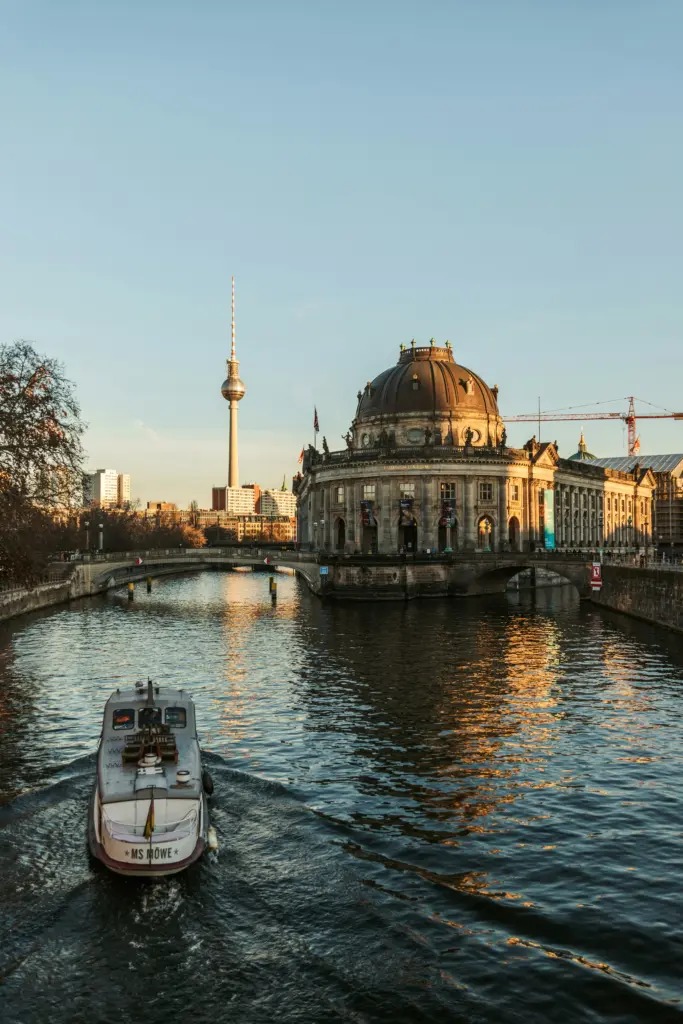
“I would call Berlin ‘post-secular,’” says Luke. “Secularism doesn’t seem to have delivered on its promise, and many people are still searching for meaning. But how do we actually meet those people and build enough trust for those conversations to happen? Forming relationships can be difficult in Berlin. This café and community hub gives us space to make connections with people we wouldn’t ordinarily meet and have conversations we may not otherwise get to have.”
In a city full of artists, writers, musicians, performers, and other creatives, the space provides room for workshops, creative gatherings, and local artists to display their work.
“Berlin is expensive, so we try to keep our prices accessible,” Luke explains. “For people who work from home, it can be helpful just to have somewhere affordable to go, work alongside other people, and have some interaction during the day. We also host gatherings and events that give people reasons to connect.”
Luke and Amanda’s Christian faith shapes their practice of hospitality, building community, and making space for relationships to form. They hope those relationships can lead to conversations about Jesus and discipleship while also prioritizing making people feel genuinely welcome.
“It’s very normal here to see people living and working alongside one another without necessarily having much interaction. We want this to be a place where conversation and connection can happen a little more naturally,” says Luke.
Luke’s, Amanda’s, and their GEM co-workers’ dream wasn’t to establish a “Christian café,” but Christian groups also meet in the space at times for things like team meetings, trainings, or other gatherings, along with all the other groups who use the space. The GEM workers’ hope is that people from different backgrounds will genuinely get to know one another, and that some of those relationships will make space for deeper conversations about life and faith.
“We want to have a high-quality café where people come and spend time,” Luke explains, “but the café is not the goal. The goal is people. And as relationships develop, we hope to be attentive to the people who want to talk more deeply about faith, life, or Jesus, and to invest in those relationships.”
The space and its use are still developing as Luke, Amanda, and their co-workers continue to learn more about the community’s needs.
Relationships and trust often take time here, and they are not something Luke and the others want to rush. They hope to keep showing up faithfully, building real relationships, and allowing deeper conversations and community to grow over time.
If you would like to know more about GEM’s work in urban areas throughout Europe, contact [email protected].
About the author: Jenny Garrity is a Storyteller with Greater Europe Mission. Jenny and her husband, Kim, joined GEM in 1984. They have served in Germany, Belgium, and most recently, Greece in response to the refugee crisis.